
Emergency Leak Detection in Pottsville: find the source before it spreads
A hidden leak rarely announces itself. It shows up as a damp wall, a water bill that makes no sense or the sound of running water in a quiet house. Finding the source first saves you from opening walls that were never the problem.
- Licensed and insured plumbers
- Same-day service when available
- 24/7 emergency dispatch
Signs of a hidden leak
Water travels. The stain on a ceiling can sit several feet from the pipe that caused it, and a damp basement wall may be fed by a line running overhead. These are the signs that callers describe most, roughly in the order they appear:
- A water bill that rises with no change in how the household uses water
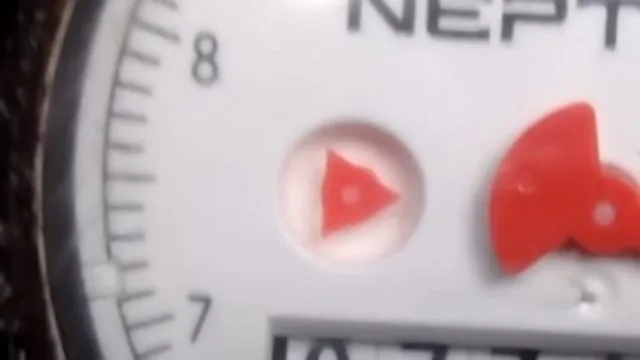
- The meter dial or low-flow indicator still moving when every fixture is off
- A damp, warm or discolored patch on a wall, ceiling or floor
- Musty smell in a room with no visible moisture
- The sound of water running when nothing is on
- Low pressure at one fixture or across the house
One sign by itself proves little. Two together usually mean a leak is worth tracing today rather than next month.
The meter check you can do before calling
A meter check is the safest first step and it takes about ten minutes. It tells you whether water is leaving the house at all, which narrows what the plumber needs to look for.
- Make sure every faucet, appliance and the ice maker is off, and no one flushes a toilet.
- Find the water meter and note the reading or the position of the low-flow dial.
- Wait fifteen minutes without using water, then read it again.
- If the number or dial moved, water is escaping somewhere on the house side of the meter.
In Pottsville, the water authority's own definitions place its service line up to the curb stop or property line. Everything from that point to your house sits on the customer side, which is where most meter-confirmed leaks turn out to be.
A moving meter and no idea why?
Describe what the meter did when you phone in. Whether the cause is a fixture, a buried line or something urgent, a plumber can often narrow it down by phone.
Call (833) 840-2034 Contact pageHow a plumber finds a leak without tearing out walls
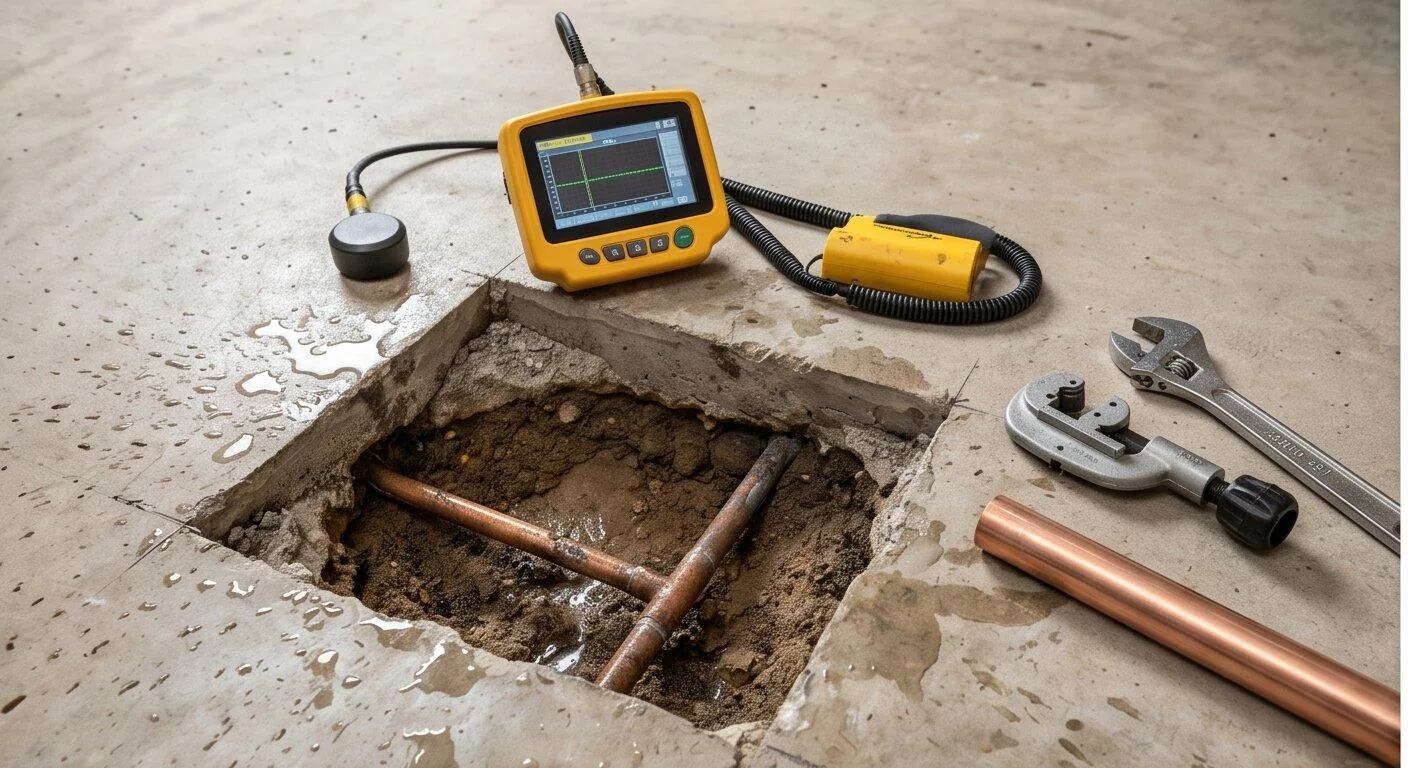
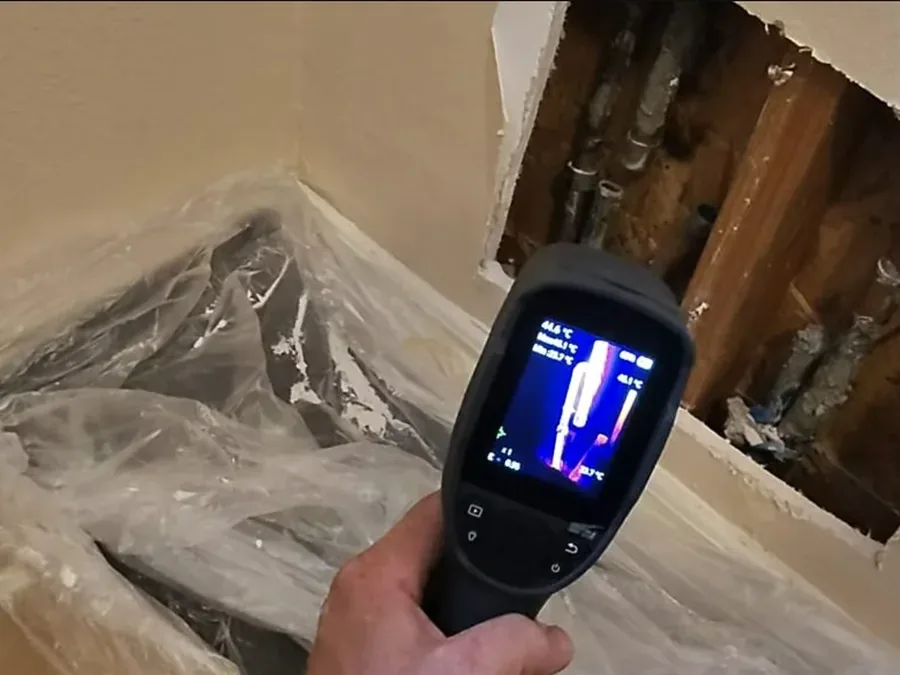
Leak detection is a sequence, not one gadget. The plumber starts with the least costly questions and moves to equipment only when the simple answers run out. A meter shut-in test isolates whether the leak is before or after the main valve. Pressure gauges on a closed line show whether a section is holding. Acoustic listening picks up the hiss of water escaping under pressure, and thermal imaging shows a cooler or warmer patch where a hot or cold line is wet.
| Method | What it shows | Good fit when |
|---|---|---|
| Meter shut-in test | Whether water is leaving the house at all | The bill or dial moved and the leak is not visible |
| Pressure test on a closed line | Which section of pipe fails to hold | A supply line is suspected but unreachable |
| Acoustic listening | The point where escaping water makes noise | The pipe is buried or behind a finished wall |
| Thermal imaging | Temperature differences from wet material | A hot line leaks inside a wall or floor |
| Hydrostatic test on a drain line | Whether a drain pipe leaks under a water load | A damp area sits below a drain run |
Which method comes first depends on the symptom. A plumber who starts with the most expensive tool before checking the meter is skipping steps that would have cost less.
Leak found, damage getting worse?
If water is already reaching drywall, flooring or insulation, speed matters. Call now and a plumber can tell you what to shut off while help is arranged.
Call (833) 840-2034 Contact pageRepairing the leak once it is found
Finding the leak is half the job. The repair depends on what failed and where. A worn compression fitting or supply connector is a short visit. A pinhole in a section of old pipe may call for cutting out the section and joining new pipe, while a line with several weak points is a better candidate for replacing the run. Ask the plumber to show you the failed part and to explain why the repair they propose fits it.
Hidden and underground leaks
A leak in a buried water line often shows up as a soggy patch of yard, a drop in pressure or a meter that spins with the house shut off. These are the leaks that need locating before digging, and in Pottsville that means calling 811 at least three business days ahead so other buried lines get marked. The part of the line from the curb stop to the house is the customer side under the authority's definitions, so see the page on water line repair and replacement if the leak sits in the yard.
Fixture leaks you can see
A dripping faucet, a toilet that runs after flushing or a shower valve that weeps can waste more than most people expect. They are often simple repairs, and sometimes the quickest leak detection is checking each one. If the fixture itself is worn, faucet, toilet and fixture repair covers what is usually replaced.
Checking pipe condition after a leak
Once one leak is fixed, a pipe condition check tells you whether others are waiting. It combines a pressure test on the lines, a look at accessible pipe for corrosion or green mineral crust and a note of what material runs where. Pottsville's median home was built around 1938, so age alone makes the check worth asking for, though age does not tell you what is in your walls until someone looks.
Where else leaks hide
Wall and ceiling leaks usually come from supply lines or drain connections above the stain, and the visible patch is rarely the source. Under a house, in a crawl space or in a basement, leaks tend to show first as wet insulation, rusted hangers or a persistent damp smell. In cold weather, a pipe that froze and split can start leaking when it thaws, so check exterior walls and unheated rooms after a hard freeze. January lows around 20 degrees Fahrenheit make that a real possibility here.
Irrigation and sprinkler systems are a separate trade, and a plumber who finds a leak on that equipment will tell you to call an irrigation specialist. If you need the leak found fast at any hour, the dispatch line takes same-day requests when available.
Leak detection questions
What should I do first about a leak in my attic?
Shut off the water to the home if the leak is active, then move belongings away from the wet area and put a bucket under any drip. Photograph the damage before you touch it. Attic leaks can come from a roof, a vent or a supply line, so have a plumber confirm the source before anyone patches a ceiling. If the stain appears only when it rains, the roof is the likelier source.
How do I tell whether I need leak detection or just a repair?
Detection is for leaks you cannot see: a meter that moves with everything off, a damp patch with no visible pipe, or a bill that climbed. Repair is for a leak you can already point to, such as a dripping trap or a weeping valve. Many calls start as one and become the other, because a found leak still has to be fixed.
Why does my leak keep coming back after a plumbing repair?
Two common reasons: the first repair treated a symptom, or the leak has a second source on the same line. Old pipe often develops weak spots in several places, so patching one only shifts the pressure to the next. Ask the plumber to pressure test the line after the repair and to tell you what condition the rest of the run is in. Repeat leaks on the same line usually point toward replacing the section.
Is a pipe leak repair always a big job?
No. Many leaks are a worn fitting, a failed supply connector or a valve packing nut, and those are repairs measured in hours. The size of the job depends on where the pipe is and how far the damage has gone. A leak inside a wall costs more to reach than one under a sink, and that is the part a plumber should explain before starting.
Related help
Water that has already soaked a room is a water damage restoration job, which is separate from finding the leak. Leaks near a drain or toilet may trace back to the drain system. To see what shapes a plumbing bill, read the cost factors page, or look at where dispatch covers around Pottsville.
Leak in Pottsville right now?
Close the main valve if you can reach it, then call. Someone answers all night, and your address decides whether a plumber can come today.
Call (833) 840-2034 Contact page- Licensed and insured plumbers
- Same-day service when available
- 24/7 emergency dispatch