Repiping in Pottsville: when to patch a pipe and when to replace the run
Census-based sources put the median Pottsville home at about 1938, with more than half built before 1940. Older houses can hold galvanized steel, early copper or later plastics, and January lows near 20 F add freeze risk. Know what pipe you have before deciding what to fix.
- Licensed and insured plumbers
- Same-day service when available
- 24/7 emergency dispatch
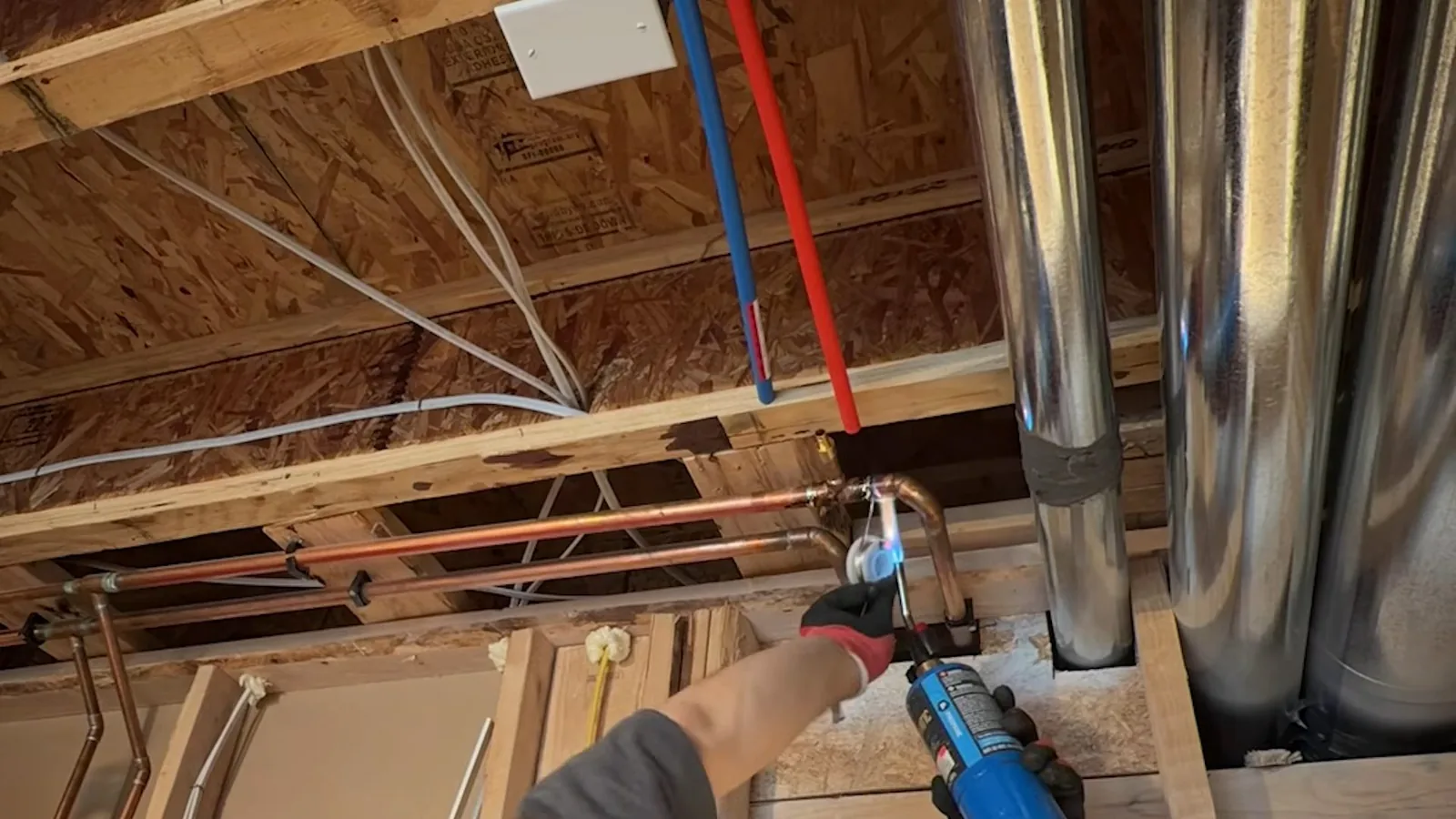
Burst or frozen pipe: the first ten minutes
- Shut off the main water valve and open the lowest faucet to drain the line.
- Turn off power to wet areas if water reaches outlets, appliances or the panel.
- Photograph the damage before moving anything, which helps with an insurance claim.
- Open cabinet doors and let warm air reach pipes if you suspect a freeze, and do not use an open flame.
- Call the dispatcher and describe where the pipe is and how fast water is escaping.
Shenandoah had a boil advisory after a main break tied to extreme cold, according to local TV reports, which shows how cold snaps here reach the water system. Inside a house, the exposed pipes in an unheated basement, crawl space or outside wall are the first to go.
Pipe burst in Pottsville?
Close the main valve first, then call. A same-day visit is possible when the schedule allows, and the dispatcher names what else to switch off while a plumber is on the way.
Call (833) 840-2034 Contact pageWhat your pipe is made of
| Material | Where you see it | Usual problem |
|---|---|---|
| Galvanized steel | Older homes | Rust inside, low pressure, brown water |
| Copper | Mid-century onward | Pinholes, joint leaks, corrosion from water chemistry |
| Polybutylene | Late 1970s to 1990s | Brittle fittings that fail |
| CPVC | 1980s onward | Cracks with age and heat |
| PEX | Newer work and repipes | Few; fittings and sun exposure matter |
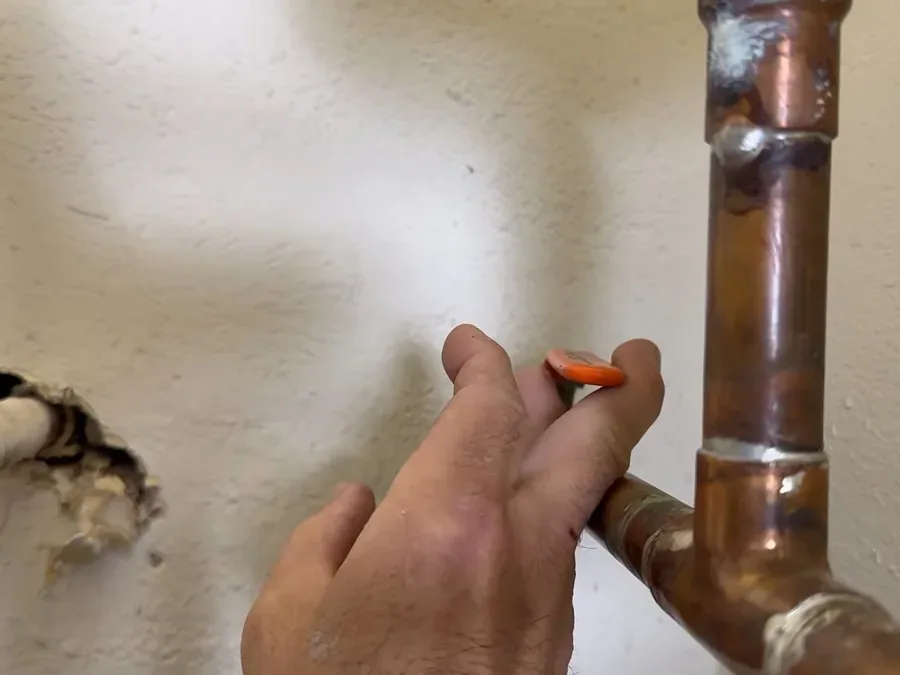
No local survey lists the pipe materials in Pottsville homes, so confirm what you have first. Look where the main enters the house, at the pipes under a sink or beside the heater. Magnets stick to galvanized steel but not to copper, and plastic pipe is easy to tell by feel. A plumber can confirm it in a minute.
Galvanized and copper
Galvanized steel rusts from the inside, so it narrows over time. The first sign is falling pressure and rusty water at the tap. Copper can last for decades, yet pinholes appear where water chemistry attacks the wall. Several pinholes within a few years is a sign of a failing run, not bad luck.
Polybutylene, CPVC, cast iron and PVC
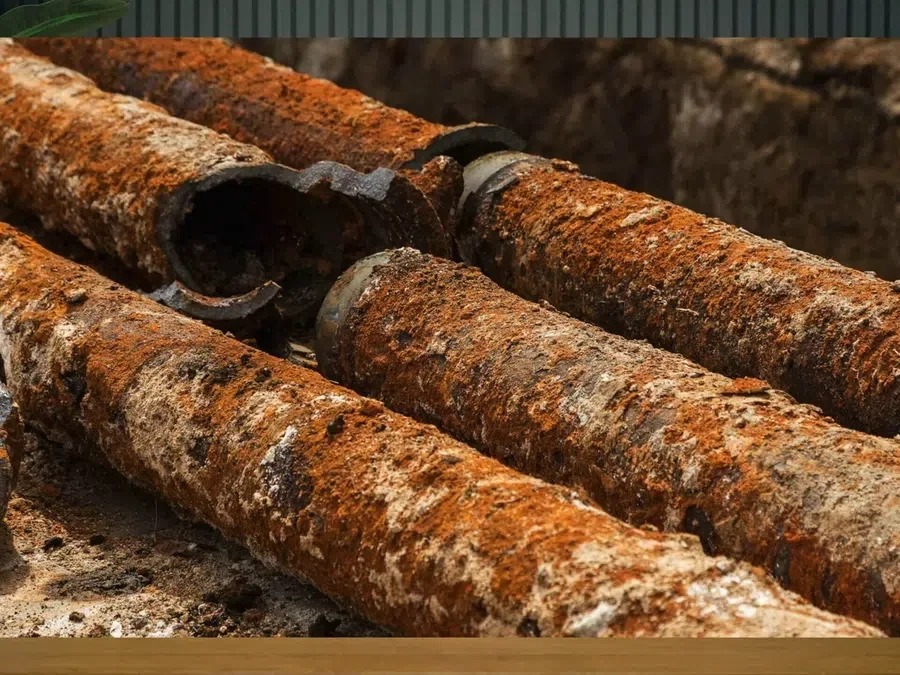
Polybutylene needs attention because its fittings can fail without warning. CPVC turns brittle with age and can crack near hot lines. Cast iron appears on the drain side of older homes, where it rusts and scales, while PVC is common on newer drains. The drain side belongs with drain clearing and sewer line work, and the plumber will tell you which side your problem is on.
Under-slab and underground lines
Pipes under a slab or buried in a yard cannot be seen, so repair starts with finding the leak. Falling pressure, a wet spot or a high water bill are the clues. The slab leak page and the water line page explain how those leaks are located and repaired.
Whole-house repiping: what to expect
- Plan: the plumber maps the supply lines, picks a material and sets a work plan.
- Water off: ask how long the supply will be shut and whether the home has to be vacated.
- Walls: small openings are cut and patched, and finishing paint is usually separate work.
- Test: the new system is pressure tested before the walls close.
- Permit: ask City Code Enforcement at (570) 622-1234 whether the work needs a permit.
Repeat leaks in your pipes?
Tell the dispatcher how many leaks you have had and what the pipe is. The plumber can tell you whether it points to a repair or a replacement.
Call (833) 840-2034 Contact pageRepair versus replacement: an honest comparison
Repair makes sense when the pipe on either side of the leak is sound, a clamp or a short section will end the problem, and the rest of the system has no history of failures. Replacement makes sense when a material has a known failure record, leaks keep returning, or pressure and water color suffer. The plumber should show you the old pipe and say why they recommend one route.
Pressure testing and finding the leak
Pressure testing isolates sections of line to show where pressure drops. It saves cutting open walls at random. For hidden leaks, the plumber may add listening gear or cameras, as described under leak detection page.
Repiping and pipe repair questions
Should I repair a pipe or repipe the house?
A single failure in sound pipe is a repair. Repeated leaks, pinholes in several spots, brown or low-flow water from corroded pipe, or a known problem material point toward replacing a larger run or the whole system. Ask the plumber to show you the condition of the pipe on either side of the leak before deciding.
What do I do about a burst pipe right now?
Shut off the main water valve, open a faucet at the lowest point to drain the line and switch off the electricity if water is near outlets or the panel. Move valuables out of the wet area and call. If the pipe froze, do not use an open flame to thaw it.
What is polybutylene pipe and should I replace it?
Polybutylene is a gray or blue plastic supply pipe used in many homes from the late 1970s into the 1990s, and it has a record of failing at fittings. If your house has it, ask a plumber to look at the pipe and talk about replacing it before it leaks inside a wall.
How long does a whole-house repipe take?
It depends on the size of the house and how much access the plumber has. Open basements and attics speed the work, and finished walls slow it. The plumber can describe the plan, how long water will be off and how walls will be repaired, before any work starts.
Is CPVC or PEX better for supply lines?
Both are common replacements for older metal pipe. PEX is flexible and resists freezing damage better, while CPVC is rigid and works well in straight runs. The plumber will recommend one based on the layout of your house and local code.
Can pinhole leaks in copper be fixed?
A single pinhole can be patched or the section replaced. Several pinholes in a short time usually mean the copper is wearing out from the inside, and replacing the run is likely to save repeated visits.
Pipe problems that lead to other work
Burst pipe damage that has soaked floors or walls may need water extraction. Heater connections are covered under heater replacement. For how repair and repipe quotes are built, see the cost factors.
Talk through a repair or repipe tonight
Give your address, the pipe type if you know it and what you see. The dispatcher confirms availability and explains the next step.
Call (833) 840-2034 Contact page- Licensed and insured plumbers
- Same-day service when available
- 24/7 emergency dispatch